Apache HTTP Server
Category of Apache HTTP Server:
Tags:
Open SourceLinuxDesktop App
Description:
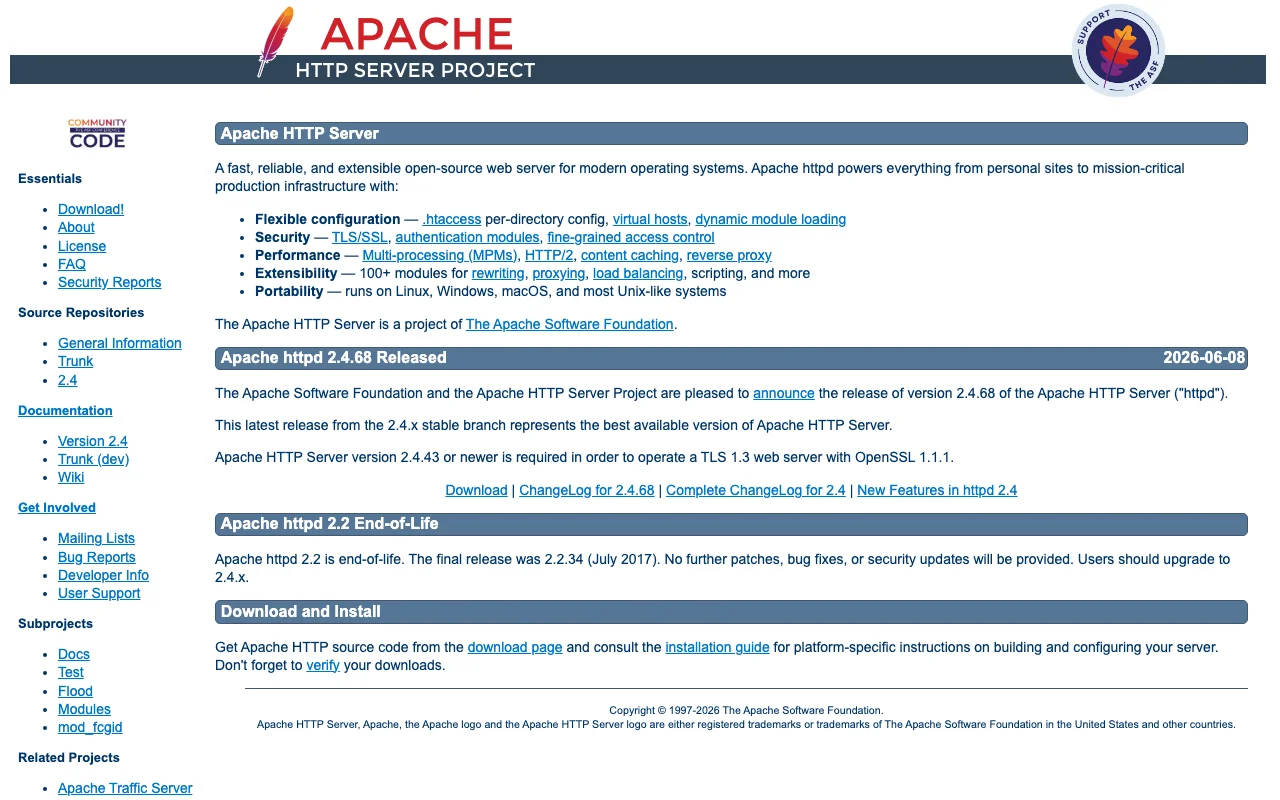
The Apache HTTP Server, often referred to as httpd, is a robust and highly configurable open-source web server. It serves as the backbone for a vast array of websites, from personal blogs to large-scale enterprise applications. Apache httpd is celebrated for its flexibility, offering extensive customization options through per-directory configurations, virtual hosts, and dynamic module loading. It
Apache HTTP Server: Powerful Open-Source Web Server
The Apache HTTP Server, commonly known as httpd, is a powerful and widely-used open-source web server software. It is designed to serve web content efficiently and reliably, making it a cornerstone of internet infrastructure. Apache httpd is known for its extensive feature set, including flexible configuration options, robust security protocols, and high performance capabilities.
It powers everything from small personal websites to critical enterprise-level applications. The server's architecture allows for dynamic module loading, enabling a vast ecosystem of extensions that can add functionalities such as URL rewriting, proxying, and load balancing. Its portability across various operating systems like Linux, Windows, and macOS further enhances its appeal.
How Apache HTTP Server Works
When a user requests a web page, their browser sends an HTTP request to the Apache HTTP Server. The server receives this request, processes it based on its configuration files, and retrieves the requested content, such as HTML files, images, or scripts. It then sends the content back to the user's browser as an HTTP response, which the browser renders to display the webpage.
Apache supports various Multi-Processing Modules (MPMs) that handle network requests and dispatch them to worker processes. These MPMs, like the event or worker MPMs, are crucial for managing concurrency and performance, allowing the server to handle numerous simultaneous connections efficiently.
Key Features of Apache HTTP Server
- Flexible Configuration: Supports .htaccess, virtual hosts, and dynamic module loading.
- Robust Security: Includes TLS/SSL, authentication, and access control modules.
- High Performance: Features event MPM, HTTP/2, content caching, and reverse proxy.
- Extensive Modules: Over 100 modules for rewriting, proxying, and load balancing.
- Cross-Platform Portability: Runs on Linux, Windows, macOS, and Unix-like systems.
Best Use Cases for Apache HTTP Server
- Hosting personal websites and blogs
- Serving dynamic web applications
- Implementing reverse proxy and load balancing
- Building secure and scalable enterprise web infrastructure
- Developing and testing web content locally
- Deploying content management systems (CMS)
Reviews0
Would you recommend Apache HTTP Server? Leave a comment
No reviews yet. Be the first to share your experience!
Alternatives
The best modern alternatives to Apache HTTP Server
YunoHost
5.0
Last update: 12 hours ago
YunoHost simplifies self-hosting of digital services for individuals and small organizations. This open-source system allows easy installation and management of applications like websites, email servers, and wikis, ensuring users retain full control over their data and privacy. It promotes digital autonomy and a decentralized internet.
View YunoHostTags:Open SourcePrivacy-FocusedMIT License
View YunoHostJekyll
5.0
Jekyll is a popular static site generator that transforms plain text into dynamic websites and blogs without databases or complex server configurations. It's known for its speed, simplicity, and security, making it ideal for developers and content creators. Jekyll leverages Markdown and Liquid templating to output static HTML files, easily deployable on platforms like GitHub Pages.
Open SourceFor DevelopersBrowser-Based
View Jekyll
Hestia Control Panel
5.0
Hestia Control Panel is a free, open-source web server control panel designed for speed and ease of use. It simplifies the management of web servers, emails, databases, and DNS records, making server administration accessible even for users with limited technical expertise. Its extendable architecture provides a flexible and robust solution for web hosting management.
Open SourceLinux
View Hestia Control Panel
CapRover
5.0
CapRover is an open-source, self-hosted private cloud solution designed to simplify the deployment of web applications, backends, databases, and Docker containers on your own server. It offers a user-friendly interface, making advanced server management accessible even for beginners, empowering users to maintain full control over their applications and data without vendor lock-in.
Open SourceDev Tools
View CapRover
EasyPHP Devserver
5.0
EasyPHP Devserver is a comprehensive, ready-to-use local PHP development environment for Windows. It bundles Apache, MySQL, and PhpMyAdmin, simplifying server setup for developers. Its portable and modular design allows for easy customization and updates, making it suitable for all skill levels. Features include HTTPS support, direct file access, and configurable settings to streamline local devel
Open SourceFor Developers
View EasyPHP Devserver
New Tools Releases
Recently added tools
Reeder
5.0
Reeder is a modern news reader that unifies RSS feeds, videos, podcasts, and social media into a single timeline. It features seamless cross-device syncing via iCloud, powerful custom filters, and a simple way to save links. Reeder prioritizes a clean interface and user privacy, making it an efficient tool for content consumption.
Desktop AppMobile AppmacOS
View Reeder
SurveyJS
5.0
SurveyJS is a powerful JavaScript library that enables developers to build custom survey and form management systems directly within their applications. It offers unparalleled flexibility through JSON-based configuration, ensuring users retain full ownership of their data and can handle an unlimited number of responses. The latest version, v3.0, introduces significant enhancements like a shared st
Open SourceFor Developers
View SurveyJS
Small Basic
5.0
Small Basic is a free, beginner-friendly programming language developed by Microsoft, designed to make coding accessible and fun for learners of all ages. It simplifies complex programming concepts with an easy-to-understand syntax and a built-in Integrated Development Environment (IDE) that includes helpful features like syntax highlighting and debugging tools. This educational tool empowers user
Open SourceFor StudentsFor Teachers
View Small Basic
Scenari Dokiel
5.0
Scenari Dokiel is a high-performance distributed ledger technology utilizing a hybrid consensus mechanism for rapid transactions. Ideal for DeFi, supply chain management, and gaming, its scalable and secure architecture empowers developers to build next-generation decentralized applications with confidence and efficiency.
AutomationWeb3Open Source
View Scenari Dokiel
SpurtCMS
5.0
spurtCMS is a powerful, open-source Content Management System built with Golang, designed to be adaptable for diverse industry needs and content delivery requirements. It offers a robust admin panel powered by Golang and integrates seamlessly with TailwindCSS for modern, stylish front-end development. Developers can leverage its GraphQL APIs for efficient data fetching and scalability, making it s
Open SourceFor DevelopersAPI
View SpurtCMS
Glogg
5.0
glogg is a powerful, multi-platform GUI application for programmers and system administrators to efficiently browse and search through large log files. It combines the functionalities of grep and less with features like case-insensitive filtering and auto-reloading, streamlining log analysis and troubleshooting.
Open SourceDesktop AppDev Tools
View Glogg
VokoscreenNG
5.0
vokoscreenNG is a free and open-source screen recorder for Linux and Windows, offering full screen, area, or window capture with simultaneous multi-audio recording and built-in camera support. It supports various output formats like MKV, GIF, and MP4, making it a versatile tool for tutorials, presentations, and more.
Open Source
View VokoscreenNG
Koofr
5.0
Koofr offers secure, private European cloud storage with a focus on user privacy and GDPR compliance. It allows users to consolidate multiple cloud accounts into a single interface, providing seamless access across devices. Features include encryption, secure file sharing, and online collaboration.
Privacy-FocusedSecurity
View Koofr