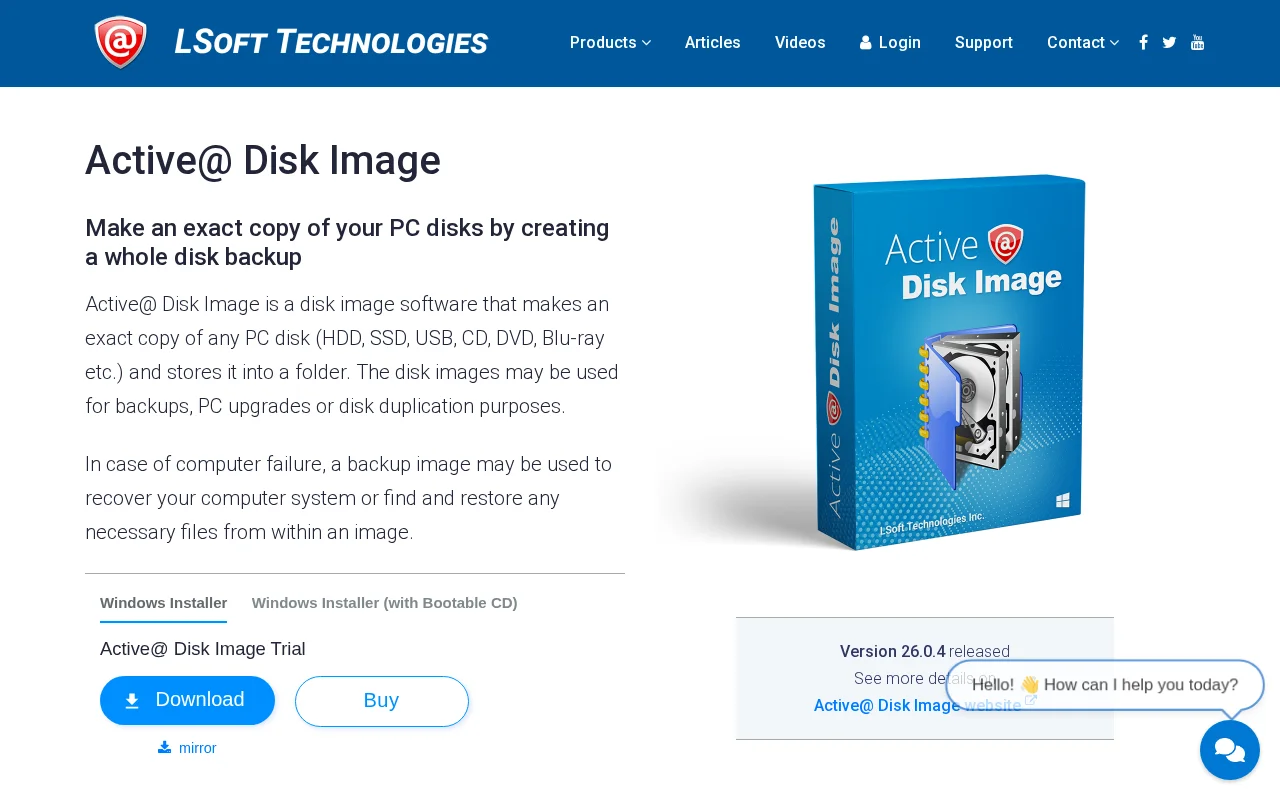
Active@ Disk Image
Category of Active@ Disk Image:
Tags:
Trial AvailableSubscription-BasedProprietary
Description:
Active@ Disk Image is a comprehensive disk imaging utility that creates exact copies of your PC's disks (HDDs, SSDs, USB drives, etc.) for backup, system upgrades, or duplication. It allows for full system restoration or individual file retrieval, featuring incremental backups, compression, virtual drive mounting, and scheduled tasks for automated data protection. Suitable for both home users and
Active@ Disk Image: Complete Platform Overview
Active@ Disk Image provides robust disk imaging capabilities, allowing users to create exact replicas of their hard drives, SSDs, and other storage devices. This ensures that a complete backup of your system is readily available for disaster recovery or hardware migration. The software supports various backup types, including full, incremental, and differential images, along with compression options to optimize storage space. Its user-friendly interface makes it accessible for home users, while advanced features like scripting and scheduled backups cater to IT professionals and businesses.
The core functionality of Active@ Disk Image revolves around creating sector-by-sector copies of disks or partitions. These images can then be restored to the original disk or a new one, facilitating seamless system upgrades or recovery from hardware failures. The tool also offers the ability to mount disk images as virtual drives, allowing for easy browsing and file extraction without the need to restore the entire image. This flexibility ensures that your data is always accessible when you need it, whether for routine backups or critical recovery operations.
Key Features and Capabilities of Active@ Disk Image
- Complete Disk Backup: Creates and restores exact disk image backups using only occupied clusters.
- Image Compression: Utilizes various levels of data compression to save storage space.
- Virtual Drive Mounting: Allows mounting images as virtual drives for easy backup browsing.
- Image Verification: Performs automatic image verification after creation for data integrity.
- Scheduled Backups: Enables scheduling Disk Image to run at specific times for automation.
How Active@ Disk Image Works Step by Step
To create a disk image, launch Active@ Disk Image, select the source disk or partition you wish to back up, and choose a destination folder for the image file. You can configure options such as compression level, verification, and scheduling. Once set, the software will create an exact copy of your selected data. To restore, you boot from the Active@ Boot Disk or use the software within Windows, select the image file, and choose the target drive for restoration.
Best Use Cases for Active@ Disk Image
- Full system backups for disaster recovery.
- Cloning disks for hardware upgrades.
- Creating bootable media for system rescue.
- Automating backups with scheduled tasks.
- Duplicating disks for multiple workstations.
- Recovering individual files from disk images.
Reviews0
Would you recommend Active@ Disk Image? Leave a comment
No reviews yet. Be the first to share your experience!
Alternatives
The best modern alternatives to Active@ Disk Image
PingPlotter
5.0
Last update: 17 hours ago
PingPlotter is a network monitoring and troubleshooting tool that visualizes latency, packet loss, and jitter over time. It helps users pinpoint network issues, share diagnostic data, and maintain stable network performance. Available in desktop and cloud versions.
View PingPlotterTags:Desktop AppTrial AvailableDev Tools
View PingPlotterHDD Regenerator
5.0
HDD Regenerator is a software tool designed to diagnose and repair physically damaged hard disk drives by restoring bad sectors, making previously inaccessible data recoverable. It supports a wide range of drive types including HDD, SSD, and NVMe, and can be run from Windows or bootable media.
Trial AvailableProprietary
View HDD Regenerator
FontExpert
5.0
FontExpert is a comprehensive font management solution for Windows, offering tools to preview, organize, and manage OpenType, TrueType, and Adobe PostScript fonts. It helps designers streamline workflows, create font libraries, and resolve font errors and duplicates.
WindowsTrial AvailableDesktop App
View FontExpert
Offigneum
5.0
Offigneum is a powerful file shredding application for PC designed to permanently and securely delete sensitive data. With 51 advanced erasure algorithms, it offers robust protection against data breaches and identity theft. Its seamless Windows integration and user-friendly interface make it an ideal solution for individuals and businesses prioritizing data security and privacy.
WindowsPaidProprietary
View Offigneum
DropSync 3
5.0
DropSync 3 is a powerful and versatile Mac application designed for efficient file synchronization and folder updating. It streamlines the process of managing files across different locations, whether you're updating a web server, backing up large photo collections, or simply keeping folders in sync. Its intelligent rsync-based engine ensures speed by only transferring changed file portions, makin
Desktop AppTrial AvailablemacOS
View DropSync 3
New Tools Releases
Recently added tools
LBRY
5.0
LBRY is a decentralized content sharing and publishing platform that empowers creators and users by offering an open, free, and fair alternative to traditional media distribution. It functions similarly to how Bitcoin revolutionized digital currency, providing a censorship-resistant network for digital content. Users can access content through various applications like the LBRY Desktop client or t
Open SourceFor CreatorsWeb3
View LBRY
Nitreo
5.0
Nitreo is an Instagram growth service that automates key social media tasks like following accounts, liking posts, and viewing stories to organically increase follower count and engagement. It saves users an average of 9 hours per week, making it ideal for creators, businesses, and agencies seeking to expand their reach and build their brand with real, engaged followers.
Social Media ManagementFor Creators
View Nitreo
Tux Rider
5.0
Tux Rider is an engaging 3D racing game for Android, offering a mobile port of the classic "Tux Racer" experience. Players control the Linux mascot, Tux the penguin, as they race down snowy slopes, collecting fish and aiming for the best times. The game features intuitive controls using the accelerometer and touchscreen, providing an accessible and fun gameplay experience. With multiple levels and
Open SourceFor CreatorsAndroid
View Tux Rider
Automad
5.0
Automad is a fast, lightweight, and flexible flat-file content management system and template engine designed for creatives. It offers an intuitive dashboard with a block editor and in-page editing capabilities, eliminating the need for a database by storing all content in human-readable text files. This approach simplifies version control and makes managing your website straightforward. Despite i
Open SourceFor Creators
View Automad
Boost.ai
5.0
Boost.ai is a leading conversational AI platform trusted by regulated industries for its robust security, privacy, and auditability features. The platform empowers enterprises to deliver exceptional customer experiences through advanced agentic AI capabilities, enabling seamless self-service across chat and voice channels. It offers a hybrid AI approach, integrating generative AI for hyper-persona
For EnterprisesAutomation
View Boost.ai
Newshosting
5.0
Newshosting offers a comprehensive solution for Usenet access and online privacy, bundling a high-speed Usenet service with a robust VPN. It provides unlimited VPN access, secure SSL encryption, advanced threat protection, and ad blocking for a safe and private online experience. With extensive article retention and a vast server network, Newshosting ensures unparalleled access to Usenet content,
Subscription-BasedProprietaryWeb App
View Newshosting
Paperwork
5.0
Paperwork is an intuitive personal document management solution designed to streamline the organization and retrieval of your important files. By transforming scanned documents into searchable digital assets, it eliminates the need for manual filing and tedious searching. Ideal for individuals and small businesses seeking an efficient way to manage their paperwork, Paperwork offers intelligent sor
Open SourceDesktop AppDocument Creation
View Paperwork
Glyphr Studio
5.0
Glyphr Studio is a free, open-source, browser-based font editor designed for hobbyists and beginners. It allows users to import various font formats, utilize familiar vector editing tools, combine glyphs, and export custom typefaces directly from their browser, offering an accessible entry into font design without the need for complex professional software.
Open SourceWeb AppBrowser-Based
View Glyphr Studio