



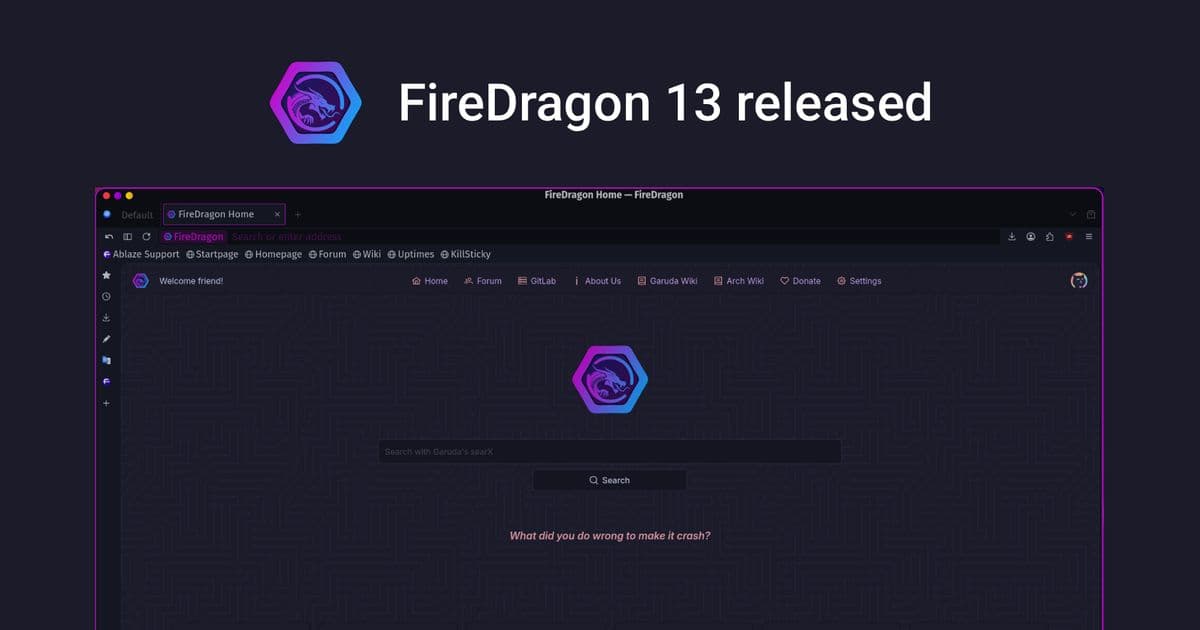
Garuda Linux has released FireDragon 13, a significant update to its customized web browser based on Floorp. This version features a complete re-implementation with a new code base, aiming for better maintainability and an improved user experience.
Key Highlights
FireDragon 13 introduces support for XDG Base Directories, ensuring better integration with standard Linux file system structures. The browser now features a redesigned welcome dialog that offers enhanced search engine selection and quick access to privacy controls. Users can easily manage settings like disabling the Firefox password manager, enabling ResistFingerprinting for enhanced privacy, and toggling prefetching for faster loading times.
The default search engine has been changed to DuckDuckGo, and a wider selection of search engines is now available. Users will also notice a slight increase in browsing speed. Additionally, permissions for WebGL and Digital Rights Management (DRM) can now be managed on a per-site basis for more granular control within your Secure Browser settings.
Advantages and Disadvantages
The core re-implementation and adoption of XDG Base Directories are significant advantages, improving the browser's stability and adherence to Linux standards. The enhanced welcome dialog and granular privacy controls offer users more power over their browsing experience. However, the removal of the Dark Reader extension from the default bundle may affect the out-of-the-box appearance for some users.
While the browser is based on Firefox, offering extensive extension support, it's important to note that enabling features like ResistFingerprinting might cause compatibility issues with certain websites. This update focuses on core improvements and user control, positioning it as a solid choice for users seeking a customizable and privacy-conscious browsing experience, especially those interested in Anti-tracking Tools.
Conclusion
FireDragon 13 represents a substantial step forward for the browser, with its revamped core and improved user interface elements. The focus on privacy and user control, combined with performance enhancements, makes it a compelling option for those looking for an alternative to mainstream browsers.