



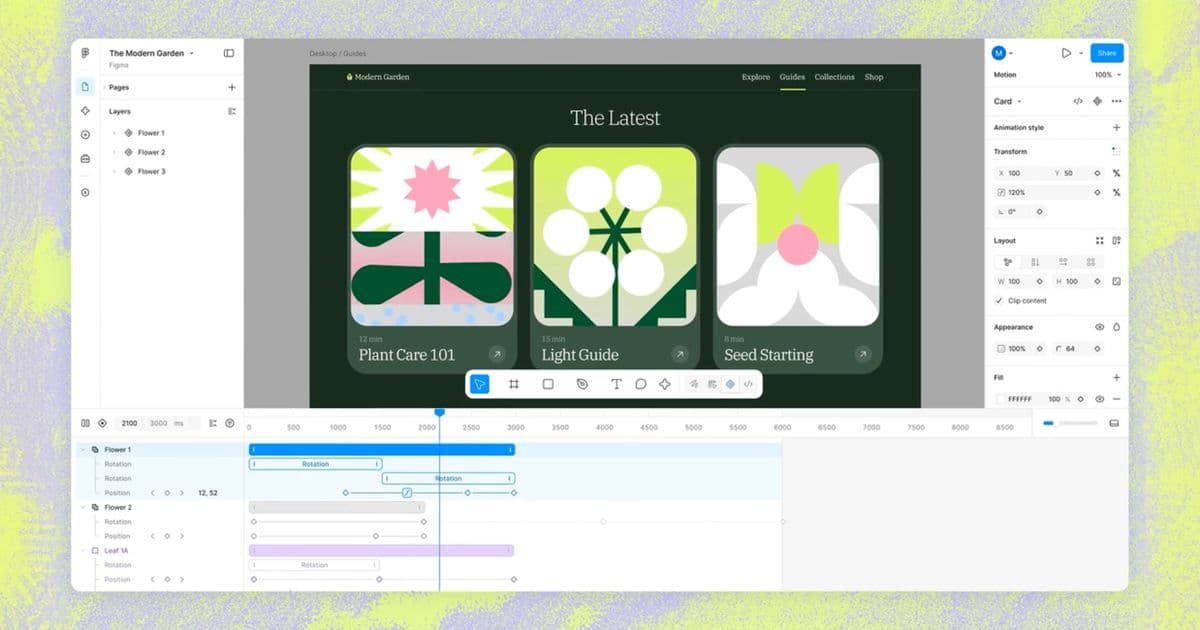
Figma, a leading platform for collaborative interface design, has rolled out significant updates aimed at improving the design and development workflow. These include an integrated motion design tool, the introduction of Code Layers, and advancements in AI-powered features. The goal is to bridge the gap between design and development, enhancing productivity for teams.
The new motion design capabilities allow designers to create complex animations and micro-interactions directly within Figma. This eliminates the need for separate tools, streamlining the prototyping process. Code Layers will enable developers to directly inspect design elements linked to actual code components, improving the handoff process.
Additionally, Figma is integrating AI to automate tasks, generate content suggestions, and improve accessibility. These updates represent a comprehensive effort to make the design and development lifecycle more efficient and collaborative. This is a significant step for teams looking to improve their Collaboration Workspace and overall Task Manager efficiency.
What Works
The integrated motion design tool is a standout feature, offering a seamless way to add dynamic elements to prototypes. This empowers designers to create more engaging and realistic user experiences without leaving the Figma environment.
Code Layers are poised to revolutionize developer handoff. By linking design elements directly to code, the potential for misinterpretation and errors is significantly reduced. This feature promises to accelerate development cycles and foster better communication between design and engineering teams.
The AI enhancements, while still evolving, show promise in automating repetitive design tasks and providing intelligent suggestions. This allows designers to focus more on creative problem-solving and strategic thinking.
What Doesn't
As with any major update, there might be a learning curve for users to fully adopt the new features. The initial rollout might also present minor bugs or require further refinement based on user feedback.
The full capabilities and limitations of the AI features will become clearer with more extensive use. Some advanced users might find the current AI offerings to be a starting point rather than a complete solution for complex needs.
While the integration of motion design and code is a significant leap, the complexity of certain animations or code integrations might still require specialized tools or expertise.
Verdict
Figma's latest update is a powerful step forward, consolidating essential tools into a single platform. The integrated motion design, Code Layers, and AI features collectively enhance the design and development workflow, promoting greater efficiency and collaboration.
These additions solidify Figma's position as an indispensable tool for modern product teams. The focus on bridging the design-development divide is particularly noteworthy, addressing a critical pain point for many organizations.
Overall, these updates are set to significantly boost productivity and streamline creative processes for designers and developers alike.